 EN
EN
 Chinese
 Turkish
 Indonesian
 German
 French
 Spanish
 Portuguese
 Russian
 Italian

The Use of Artificial Intelligence (AI) in the Food Processing Industry: A New Revolution in Food Manufacturing
Artificial Intelligence (AI) has become one of the most transformative technologies of the modern era. Its applications are rapidly expanding across industries such as healthcare, education, transportation, manufacturing, and business. The Food Processing Industry is no exception. Around the world, food manufacturers are increasingly adopting AI technologies to improve production efficiency, ensure food quality and safety, reduce waste, and lower operational costs.
The Food Processing Industry in Bangladesh, along with the global food sector, is currently undergoing a significant technological transformation. Through AI-powered solutions, food production processes are becoming faster, more accurate, and more reliable. As the concept of smart food factories continues to evolve, Artificial Intelligence is expected to play a central role in shaping the future of food manufacturing.
Artificial Intelligence refers to a technology that enables computers and machines to think, analyze, make decisions, and solve problems in a way that resembles human intelligence. AI systems can process large volumes of data, identify patterns, and make automated decisions based on the information available. In the Food Processing Industry, AI can be used for production planning, quality control, food safety management, equipment monitoring, market analysis, and supply chain optimization.
The growing importance of AI in the Food Processing Industry is largely driven by several major challenges facing the global food sector. Rising populations, increasing food demand, food safety requirements, cost pressures, and shortages of skilled labor are creating new challenges for food manufacturers. AI has emerged as an effective solution that helps businesses address these issues while improving operational performance and competitiveness.
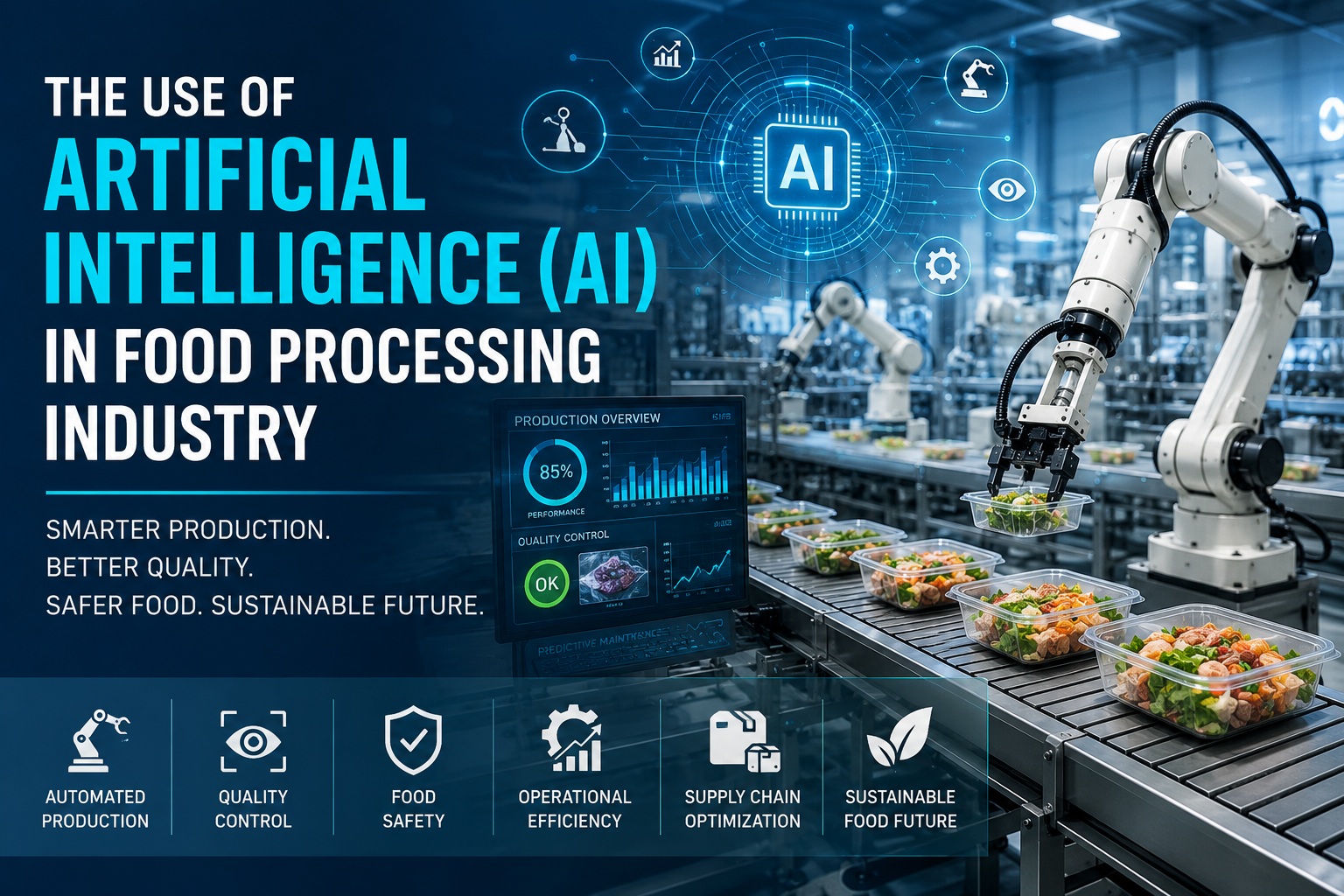
One of the most significant applications of AI in the food industry is in production management. AI-powered systems can automatically monitor and control various aspects of the production process, including temperature, humidity, ingredient ratios, production speed, and processing conditions. By continuously analyzing operational data, AI helps ensure consistency, reduce human error, and improve product quality. Automated production systems also increase productivity and reduce manufacturing time.
Quality control is another area where Artificial Intelligence is making a major impact. Traditionally, food quality inspections relied heavily on manual observation and testing. Today, AI-powered vision systems and machine learning technologies can inspect food products quickly and accurately. Cameras and sensors can detect defects in color, shape, size, texture, and packaging quality. Products that do not meet quality standards can be automatically removed from the production line, helping manufacturers maintain higher quality standards and improve customer satisfaction.
Food safety is one of the highest priorities in the food industry, and AI is playing an increasingly important role in ensuring compliance with safety requirements. AI-based monitoring systems can analyze data from sensors installed throughout the production process and identify unusual conditions that may indicate contamination or safety risks. These systems can provide real-time alerts when abnormalities are detected, enabling manufacturers to take immediate corrective action and reduce food safety risks.
Another important application of AI is Predictive Maintenance. Unexpected equipment failures can lead to costly production disruptions and downtime. AI systems can continuously monitor machine performance, analyze operating conditions, and predict potential equipment failures before they occur. By identifying maintenance requirements in advance, manufacturers can schedule repairs proactively, reduce downtime, extend equipment lifespan, and lower maintenance costs.
Artificial Intelligence is also transforming Supply Chain Management in the Food Processing Industry. Managing the flow of raw materials, production schedules, inventory, and product distribution requires accurate forecasting and planning. AI can analyze historical data, market trends, consumer demand patterns, and seasonal fluctuations to generate more accurate forecasts. This allows companies to optimize production planning and reduce the risks of overproduction or underproduction.
Inventory management is another area where AI offers significant benefits. Food manufacturers must maintain appropriate stock levels of raw materials and finished products to avoid shortages or excessive inventory. AI-powered inventory management systems can monitor stock levels in real time and automatically recommend replenishment when necessary. This improves operational efficiency and helps reduce storage costs and inventory-related losses.
Food waste remains a major challenge for the global food industry. Artificial Intelligence can help reduce food waste by improving production planning, inventory management, and demand forecasting. Accurate forecasting enables manufacturers to produce the right quantities of food products based on actual market demand. AI can also analyze shelf-life data and storage conditions to minimize spoilage and reduce unnecessary waste throughout the supply chain.
Consumer preferences and market trends are constantly evolving, making it increasingly important for food manufacturers to understand customer behavior. AI technologies can analyze information from social media platforms, online purchasing behavior, customer reviews, and market research data. These insights help companies identify emerging trends, develop new products, improve marketing strategies, and respond more effectively to changing consumer demands.
The concept of the Smart Food Factory is becoming a reality through the integration of Artificial Intelligence. In a smart food manufacturing environment, production, quality control, packaging, inventory management, and supply chain operations are connected through intelligent systems. AI works alongside technologies such as the Internet of Things (IoT), robotics, and big data analytics to create highly efficient, automated, and data-driven manufacturing facilities.
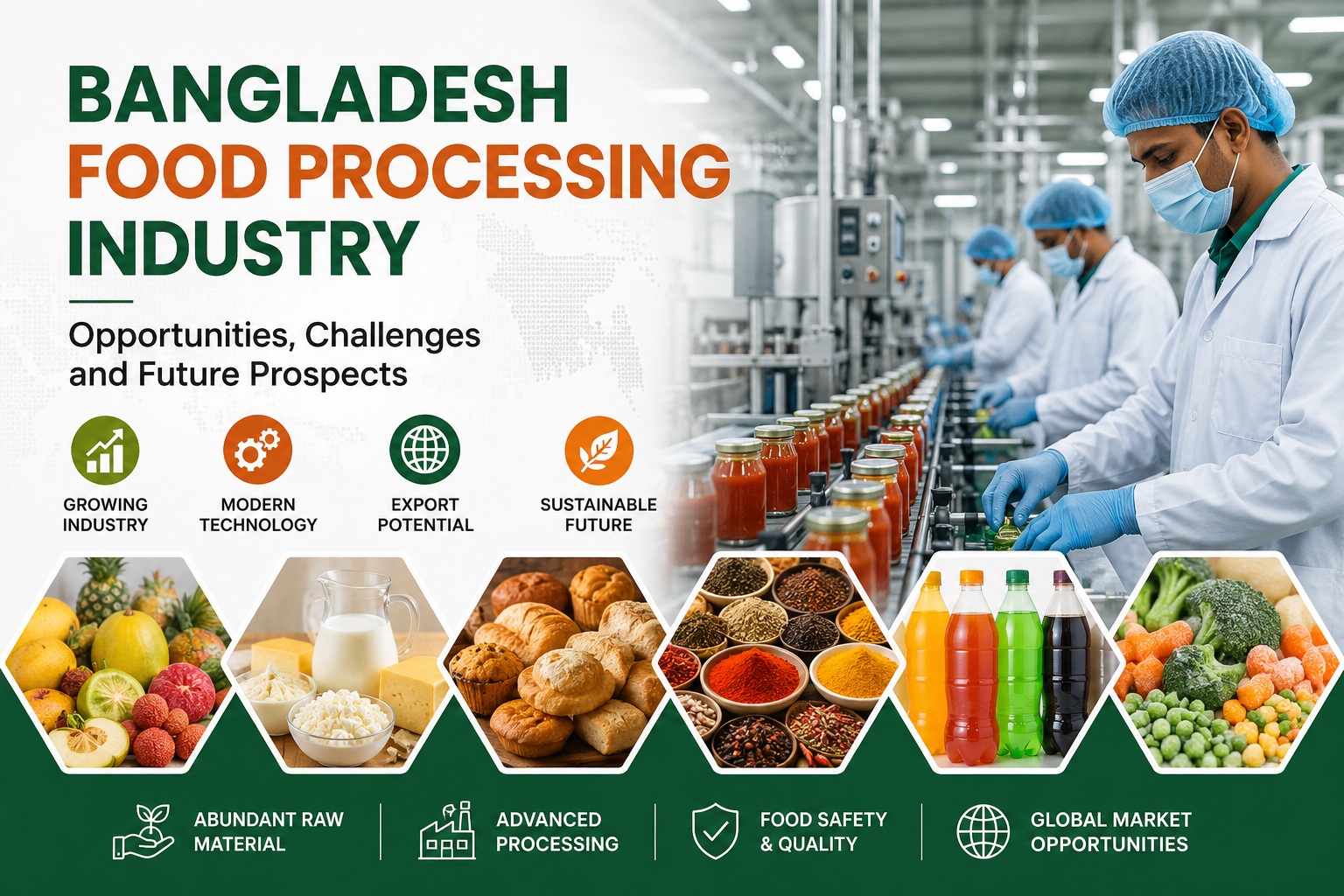
Bangladesh's Food Processing Industry is growing rapidly, creating significant opportunities for AI adoption. Manufacturers involved in bakery products, dairy products, beverages, spices, snacks, frozen foods, and food ingredients are gradually embracing modern technologies to improve efficiency and product quality. By implementing AI solutions, Bangladeshi food manufacturers can strengthen food safety standards, improve production efficiency, enhance export competitiveness, and meet international market requirements more effectively.
Despite its numerous advantages, the adoption of AI in the Food Processing Industry also presents certain challenges. Implementing advanced AI technologies often requires significant investment in equipment, software, and infrastructure. There is also a shortage of skilled professionals with expertise in Artificial Intelligence, data analytics, and automation technologies. Additionally, many small and medium-sized food manufacturers may not yet be fully prepared to integrate AI into their operations. However, as technology becomes more affordable and digital transformation accelerates, AI is becoming increasingly accessible for businesses of all sizes.
The future potential of Artificial Intelligence in the Food Processing Industry is enormous. Over the next decade, AI-driven production systems, automated quality control, smart packaging solutions, robotic processing systems, and advanced supply chain management technologies are expected to become increasingly common. These innovations will help food manufacturers improve efficiency, reduce costs, maintain high quality standards, and remain competitive in a rapidly evolving global market.
As AI adoption continues to expand worldwide, Bangladesh also has the opportunity to benefit from this technological revolution. Companies that invest in AI-powered food processing technologies today will be better positioned to compete in the future and achieve sustainable growth. Artificial Intelligence is no longer just a future possibility; it is becoming an essential component of modern food manufacturing.
In conclusion, Artificial Intelligence is bringing revolutionary changes to the Food Processing Industry. From improving production efficiency and quality control to enhancing food safety, supply chain management, waste reduction, and consumer insights, AI is transforming every aspect of food manufacturing. If Bangladesh's food industry continues to embrace AI-driven technologies, it can significantly improve productivity, product quality, and international competitiveness. The future of the modern Food Processing Industry will undoubtedly be shaped by the continued advancement and adoption of Artificial Intelligence.
About the Author

Kazi Sanowar Uddin
Managing Partner & CEO, LIMRA Exhibitions
Company: LIMRA EXHIBITIONS